SANGGA Sign in
Menu
Screening & Assessment for Family Carers

The people who care for patients need checking too

In Indonesian, sangga means a supporting pillar.

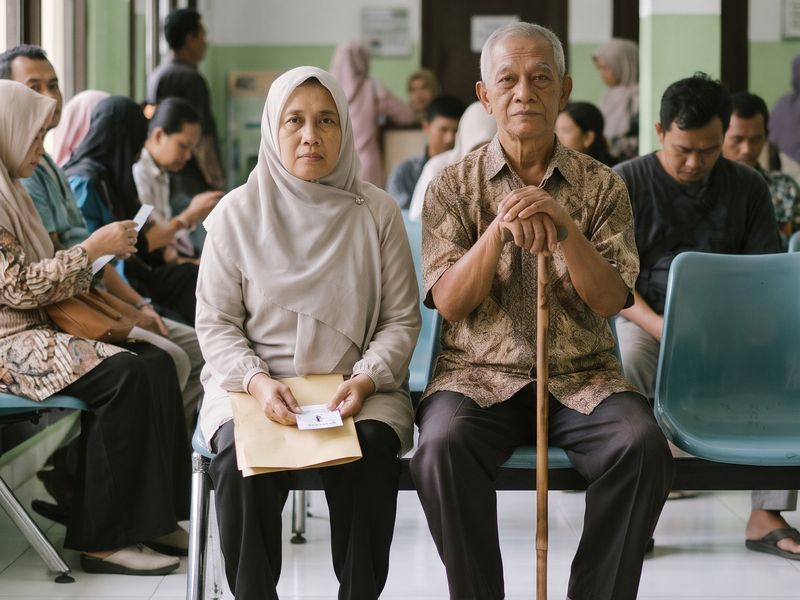
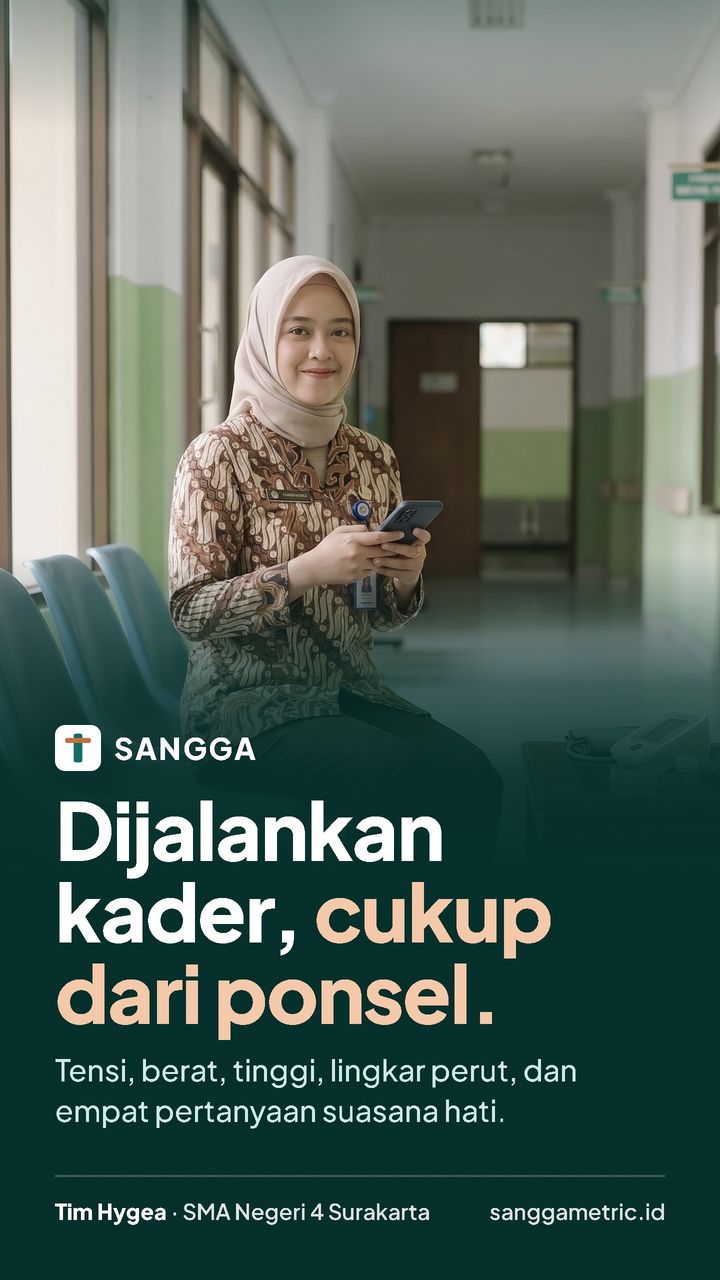
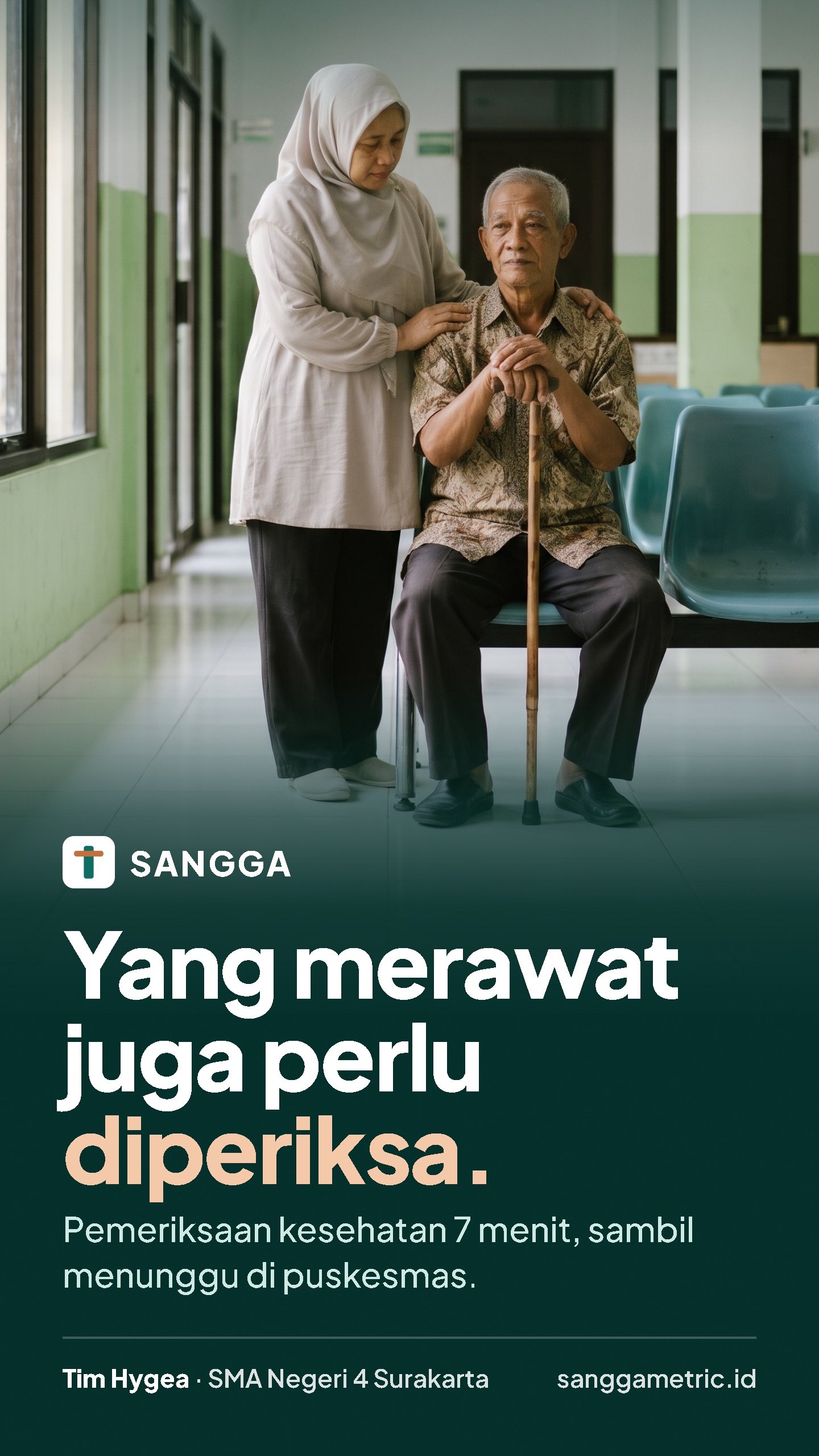
Relatives who bring a patient in and care for them at home wait at the health centre too, yet only the patient is examined. SANGGA helps community health volunteers check the carer's own health while they wait in the queue, with no need to come back another day.

  • About seven minutes, in the waiting room
  • Blood pressure and BMI thresholds from national guidelines
  • A positive mood result is handed over to a health worker
  • Team Hygea · SMA Negeri 4 Surakarta
  • Ethical clearance, RSUD Dr. Moewardi HREC
  • Copyright registered, DJKI 001552071
Illustration of a health centre service record Columns about the companion The rows in this table are made up
Patient ID Name BP BMI Mental health Follow-up Companion Companion's health
3204xxxxxxxxSri Mulyani152/9424.1SymptomsCluster 3 not recordedno field for it
3273xxxxxxxxBambang S.138/8626.8NoneEducation not recordedno field for it
no ID cardWarsini148/9024.0not yetReview Guardian ID 3204xxxxxxxxno field for it

The ID number of a guardian or companion is recorded only when the patient has no identity card: KMK No. HK.01.07/MENKES/84/2026, Chapter III letter A point 4 letter e.

Research video

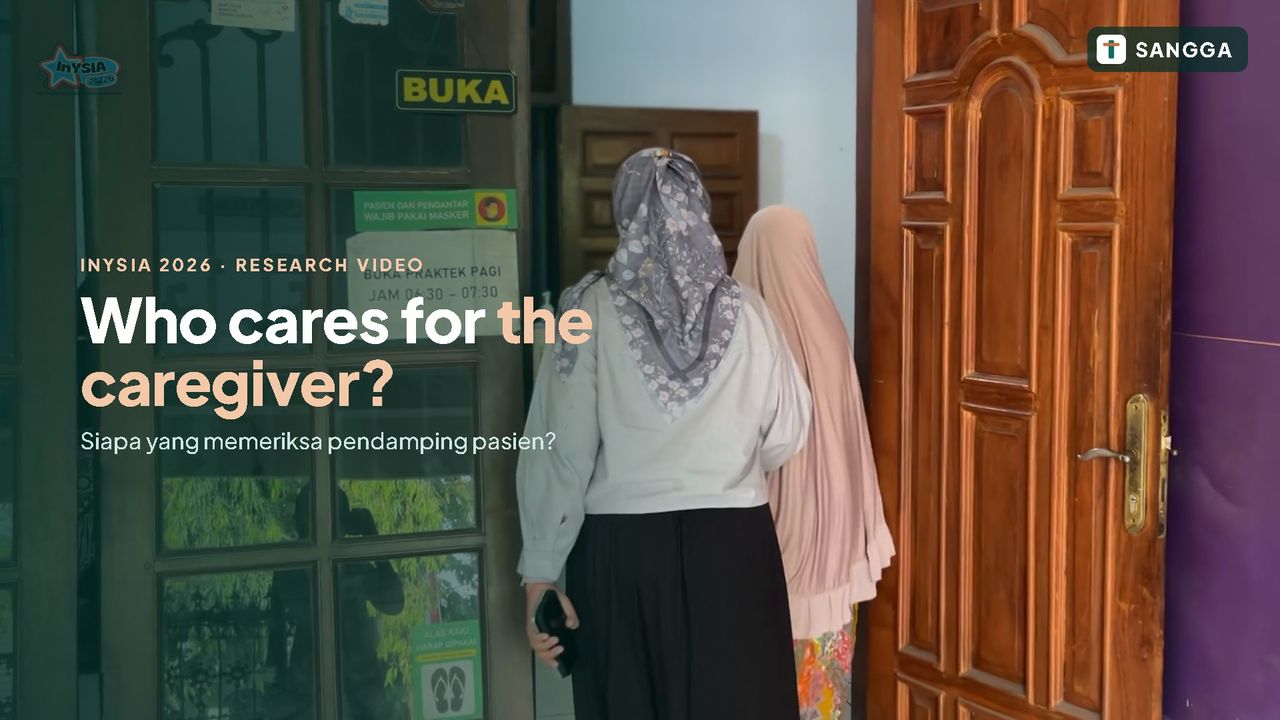
See SANGGA in action

Play video , 2 minutes 45 seconds

Anindya explains the problem, how SANGGA works, and what it offers. In Indonesian with English subtitles.

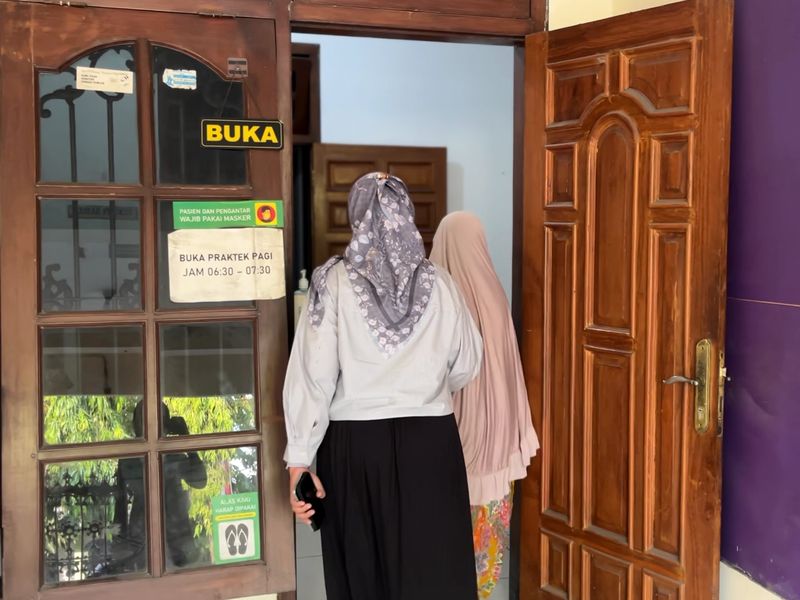
  1. Bringing them inA relative brings an older family member to the clinic.
  2. WaitingWhile the patient queues, the carer waits too.
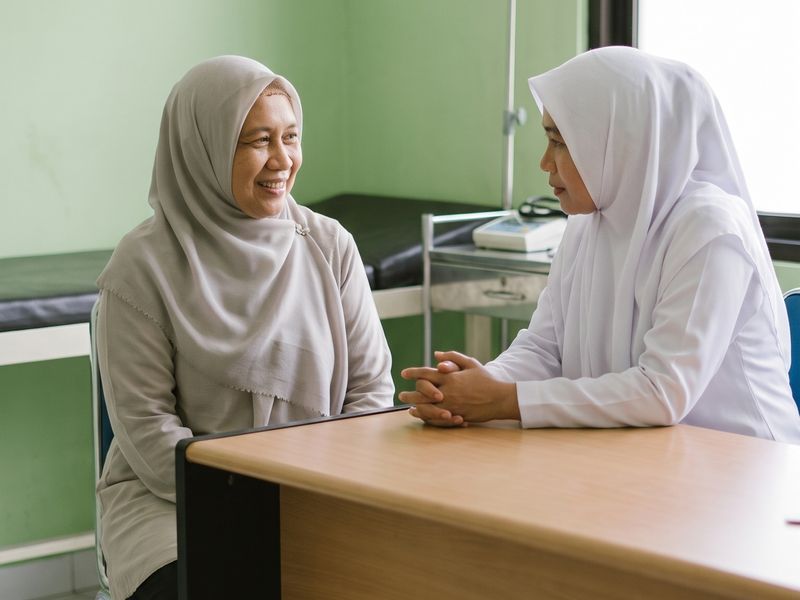
  3. CheckedA volunteer checks the carer in the waiting room.
  4. Followed upWhen needed, a health worker follows up the same day.
The problem

Most older Indonesians are cared for by their own family

11.93%

of Indonesians were aged 60 or over in 2025, up from 9.93% in 2020

Statistics Indonesia (BPS), Statistik Penduduk Lanjut Usia 2025, Vol. 22

98.9%

of carers of older people are unpaid. Only 0.1% of older people are cared for by a home nurse

Indonesia Longitudinal Aging Survey 2023 (ADB, SurveyMETER, LD FEB UI). 4,084 respondents across 9 provinces; not nationally representative

33.4%

median prevalence of depression among informal carers, from a review of 18 meta-analyses

Soh et al., Archives of Gerontology and Geriatrics Plus, 2025;2(3):100197

Caring for a relative does not automatically damage health; the risk rises among carers who feel severely strained, and it is that group screening is meant to find.

Roth et al., American Journal of Epidemiology 2013;178:1571–1578 (HR 0.82). Schulz & Beach, JAMA 1999;282:2215–2219: strained spousal caregivers had a 63% higher mortality risk.

The rules name the companion without providing any service for them

“Every person who attends a puskesmas or its network for any health service whatsoever shall be given the Free Health Check package.”

KMK No. HK.01.07/MENKES/84/2026, Chapter II letter C point 5. Unofficial translation; the Indonesian text is authoritative

“Older participants in the Free Health Check are advised to come with a companion.”

KMK No. HK.01.07/MENKES/84/2026, Chapter III letter A point 3 letter d. Unofficial translation; the Indonesian text is authoritative

Older people are advised to bring a companion. That companion comes in order to accompany someone else and is not seeking care for themselves, so they are easily missed. SANGGA offers them a check in the waiting room, using thresholds and rules that already apply.

PMK No. 19 Tahun 2024 on the organisation of community health centres. KMK No. HK.01.07/MENKES/2015/2023 on the technical guidance for integrated primary health care.

How it works

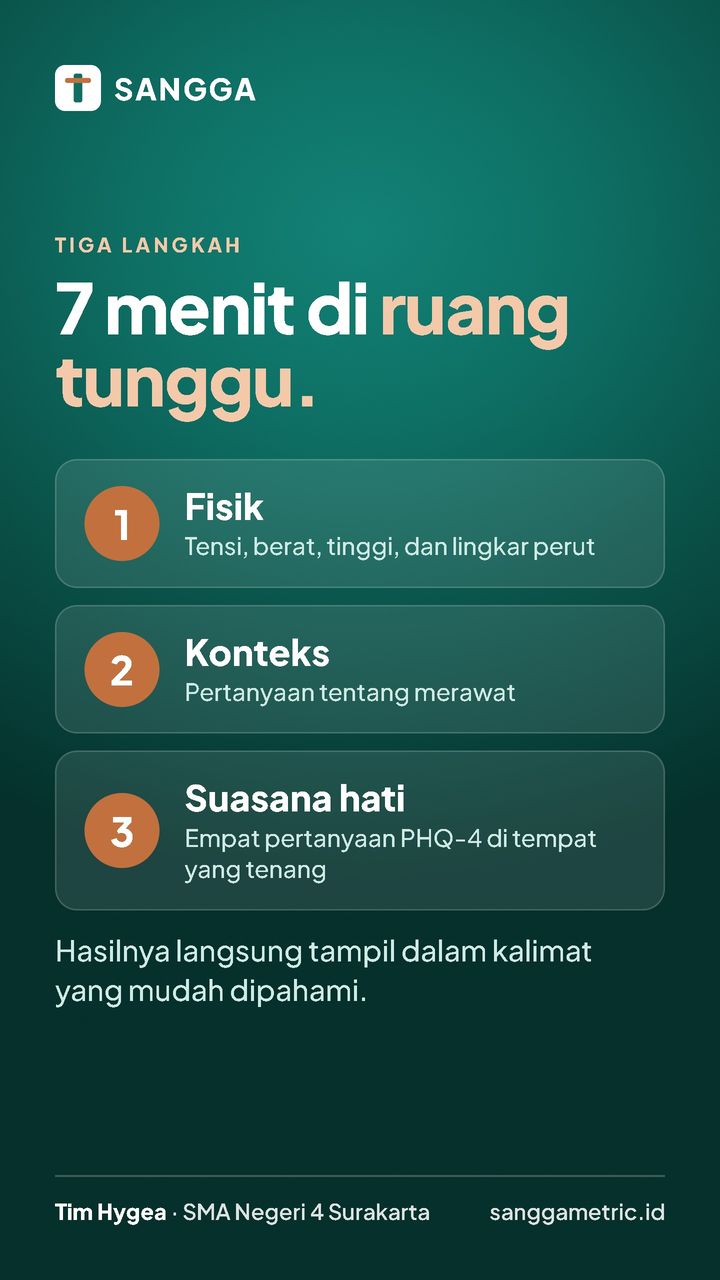
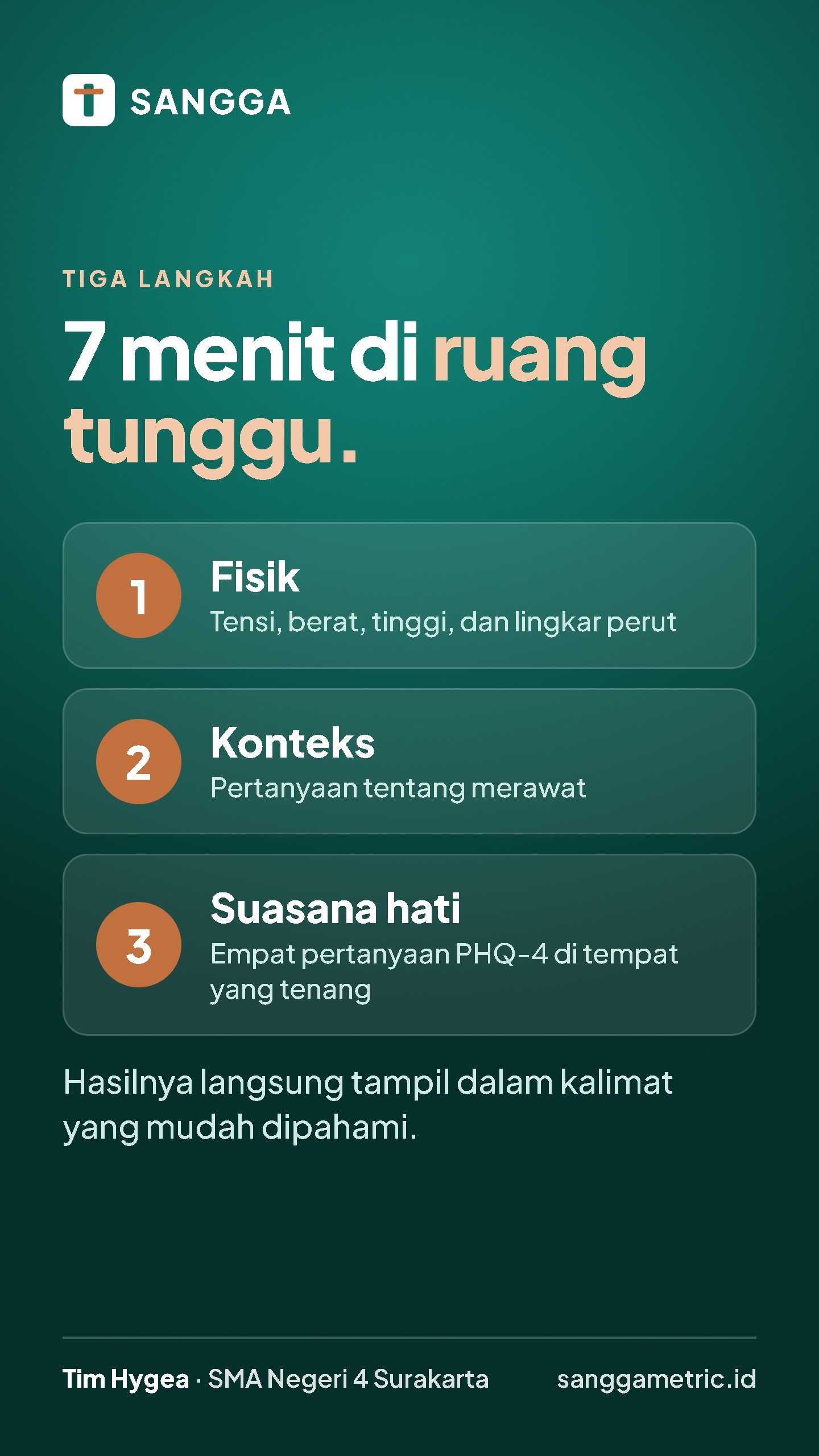
About seven minutes, while waiting in the queue

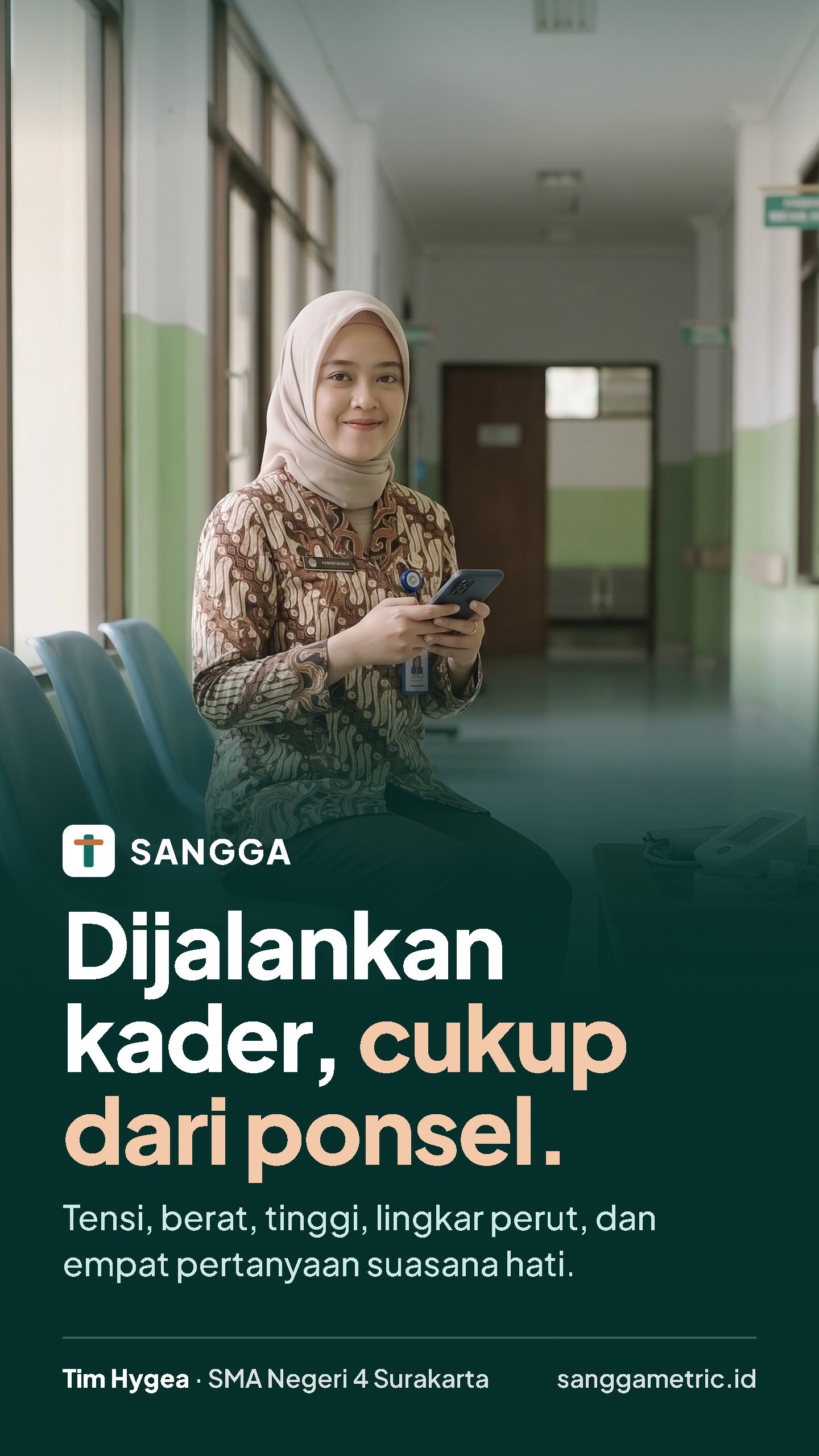
The volunteer holds the tablet and reads the questions aloud. The carer only has to answer.

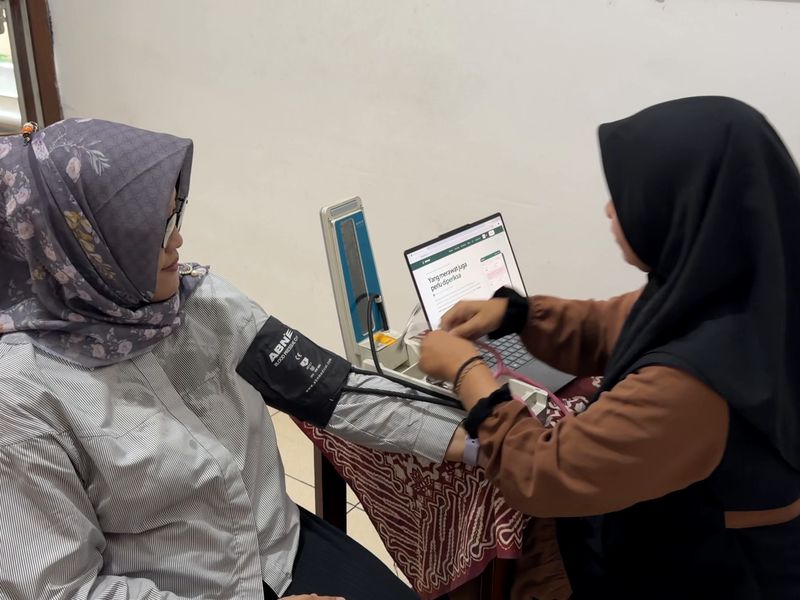
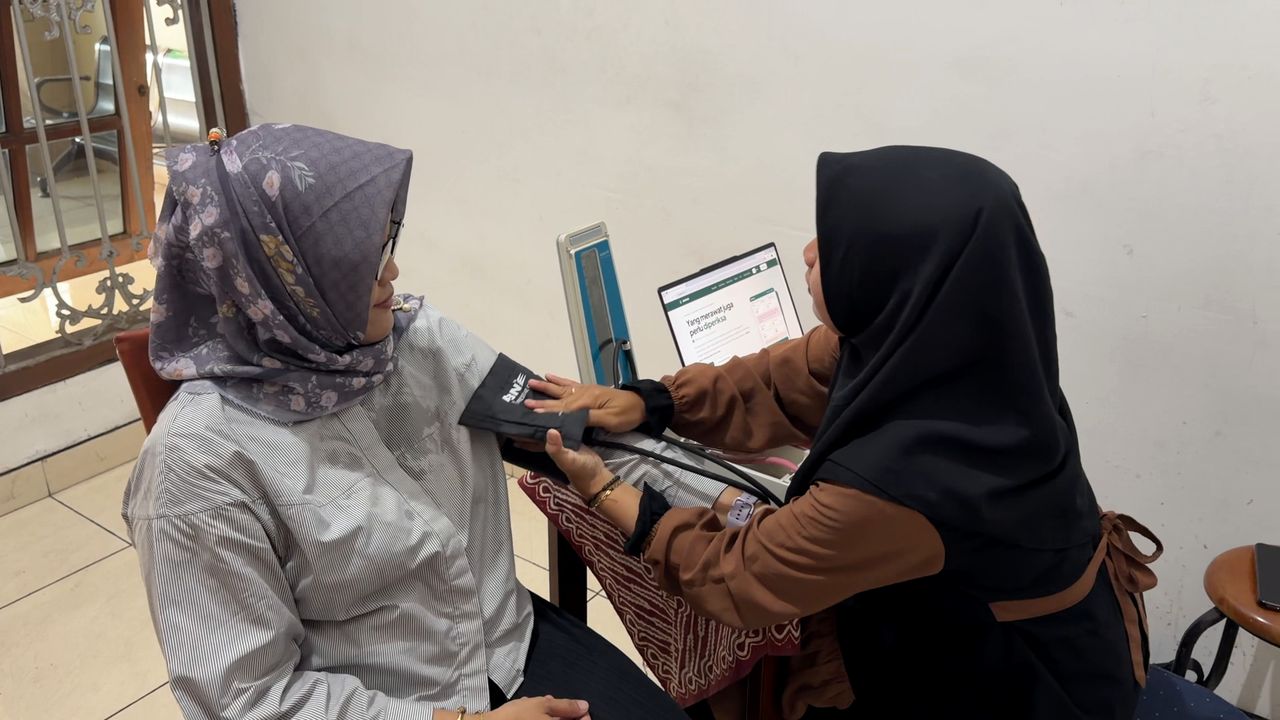
A volunteer fits a blood pressure cuff on the carer's arm.

Step 3, measurement. Blood pressure, weight, height and waist circumference are measured while waiting in the queue.

  1. Minute 0:00–0:30

    At the front desk

    The volunteer asks who brought the patient in, and whether that person is the day-to-day carer.

  2. Minute 0:30–1:00

    Ask permission

    It may be declined. Care for the patient they brought in is unchanged either way. Consent is recorded together with the version of the wording used.

  3. Minute 1:00–3:00

    Measurements

    Blood pressure, weight, height and waist circumference. If the first reading is 140/90 or above, repeat fields appear, the reading is taken again after a 3 to 5 minute pause, and the average of the two is used.

  4. Minute 3:00–5:00

    Questions

    Four questions about the caring role and four mood questions (PHQ-4). The mood section is best self-completed; the tablet can be handed to the carer.

  5. Minute 5:00–6:00

    Result

    The result appears straight away, in everyday sentences the volunteer can read aloud.

  6. Minute 6:00–7:00

    Follow-up

    If needed, it is handed to a health worker that same day. The next screening date is recorded automatically.

The repeat blood pressure protocol follows KMK No. HK.01.07/MENKES/84/2026, Chapter II letter D point 3 letter e.

Built to be used at the front desk

Buttons are large and figures easy to read, because the volunteer taps the screen while listening to spoken answers. The volunteer's screens stay light on a cheap tablet and a weak signal.

ConsentAsked at every session, and may be declined
ResultThe plain-language explanation comes first, the category after it
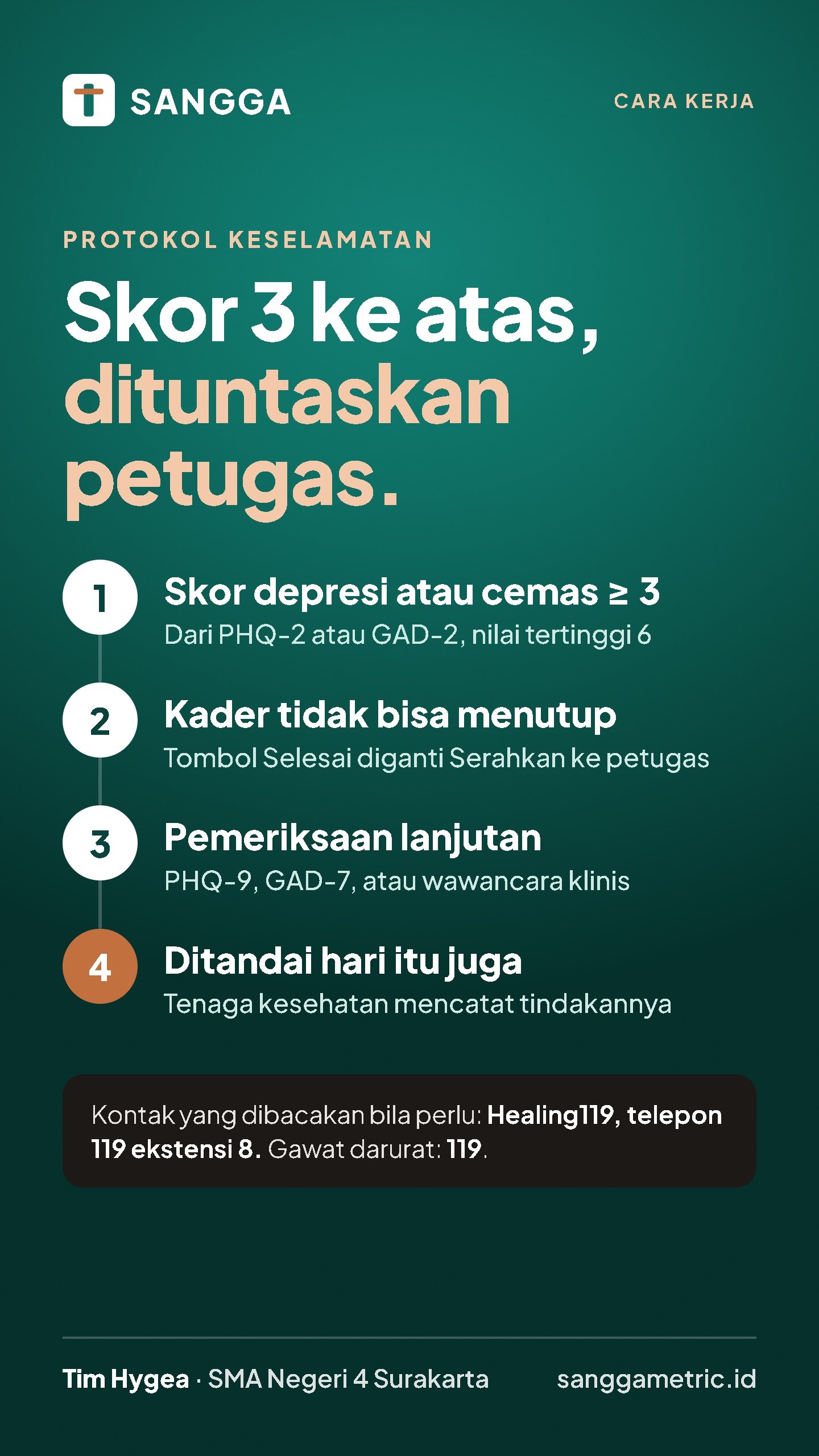
Safety gateA volunteer cannot close this pathway

The sentences on the screens above are produced by the same code as the app itself. The app is used in Indonesian in the field, so the screens are shown in Indonesian. To see the real thing, use the Try the demo section.

Safeguards

Put in place before it is used with real people

Safety

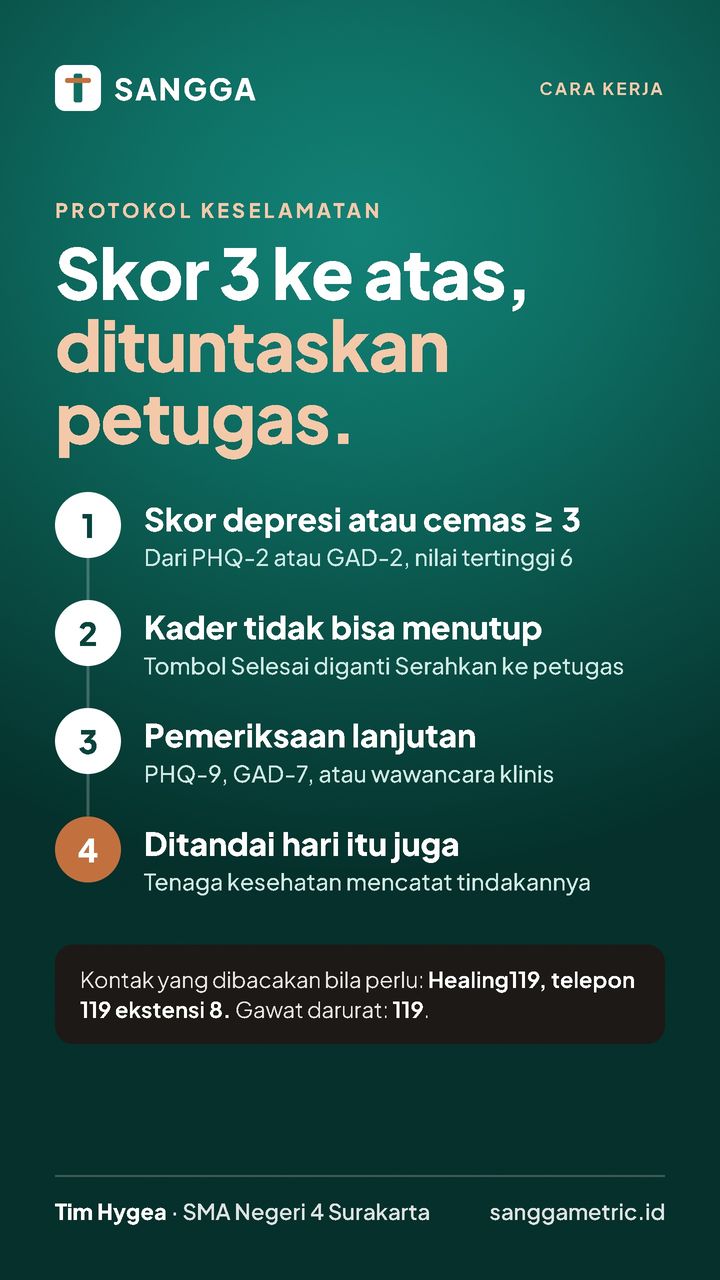
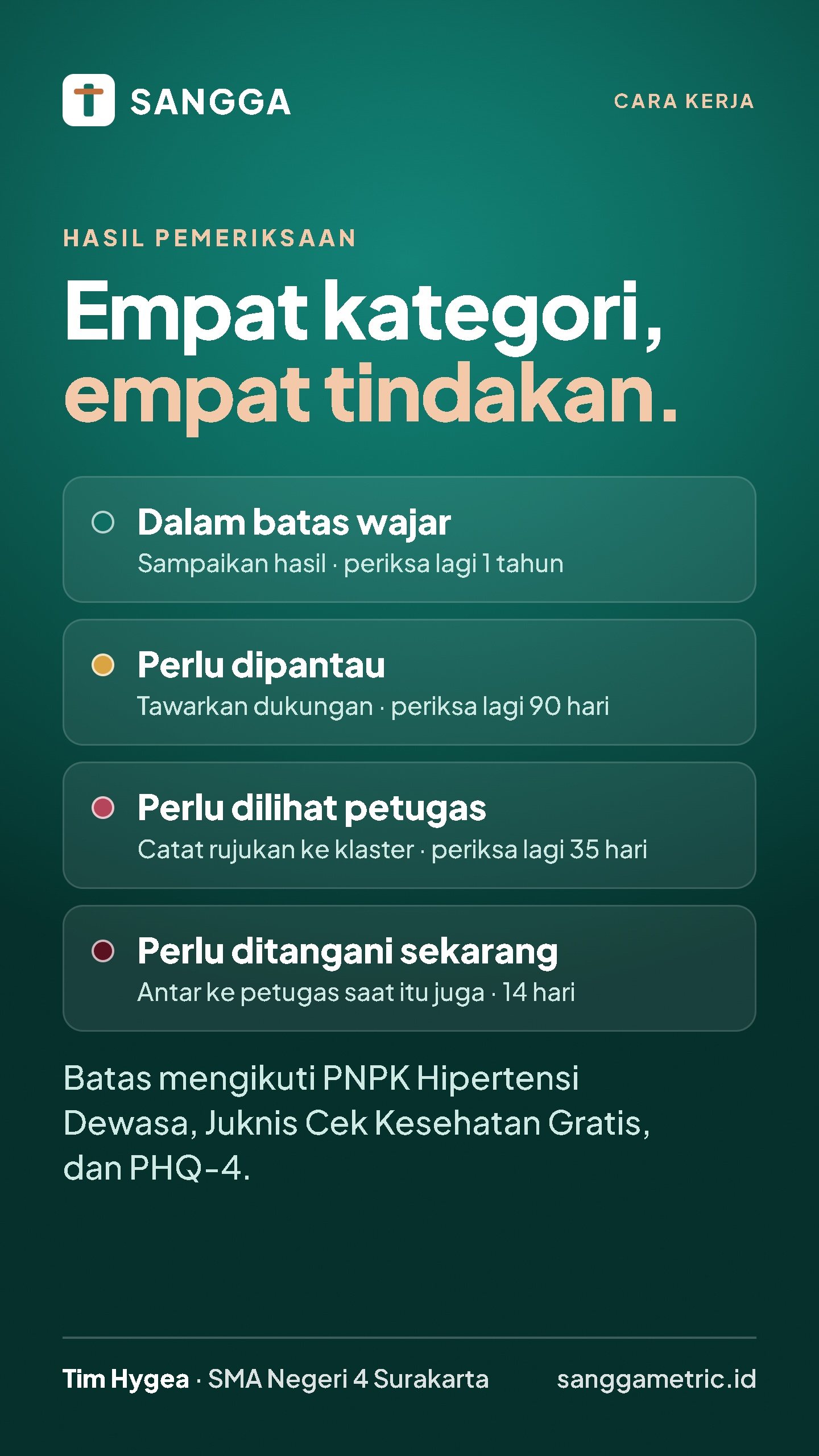
A positive mood result is handed over to a health worker

The USPSTF (2023) recommends screening adults for depression and states that the benefit only follows when positive results are evaluated further.

So a depression or anxiety score of 3 or more opens a handover that cannot be closed from a volunteer's account. Only a health worker can complete it, on the same day.

USPSTF, Screening for Depression and Suicide Risk in Adults, 2023. Under the Free Health Check, mental health examination is carried out by a doctor, nurse, midwife or clinical psychologist (KMK No. HK.01.07/MENKES/84/2026, Table 3.3).

Clinical basis

Thresholds follow official guidelines

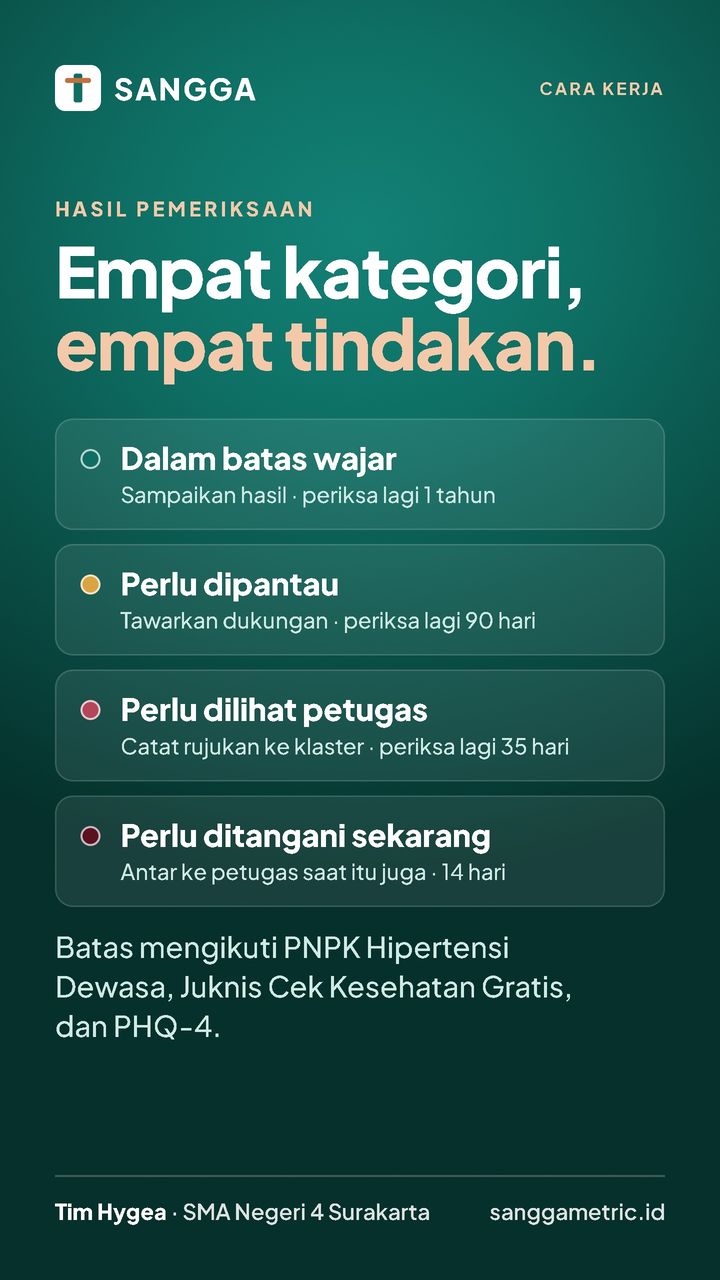
Blood pressure thresholds follow the national guideline: 140/90 and above is hypertension, and 130–139 and/or 85–89 is high-normal. A BMI below 18.5 is underweight, 23 and above is overweight, and 25 and above is obesity, matching the Free Health Check categories.

The PHQ-4 items are copied word for word from the official Indonesian translation published by Pfizer at phqscreeners.com, and the version is recorded with every screening.

KMK No. HK.01.07/MENKES/303/2026 on the national clinical guideline for adult hypertension. KMK No. HK.01.07/MENKES/84/2026, Table 4.1 and Tables 5.3 to 5.6.

Personal data

Built to the Personal Data Protection Act from the start

Health data counts as specific personal data, and screening is systematic scoring. Either one requires a data protection impact assessment.

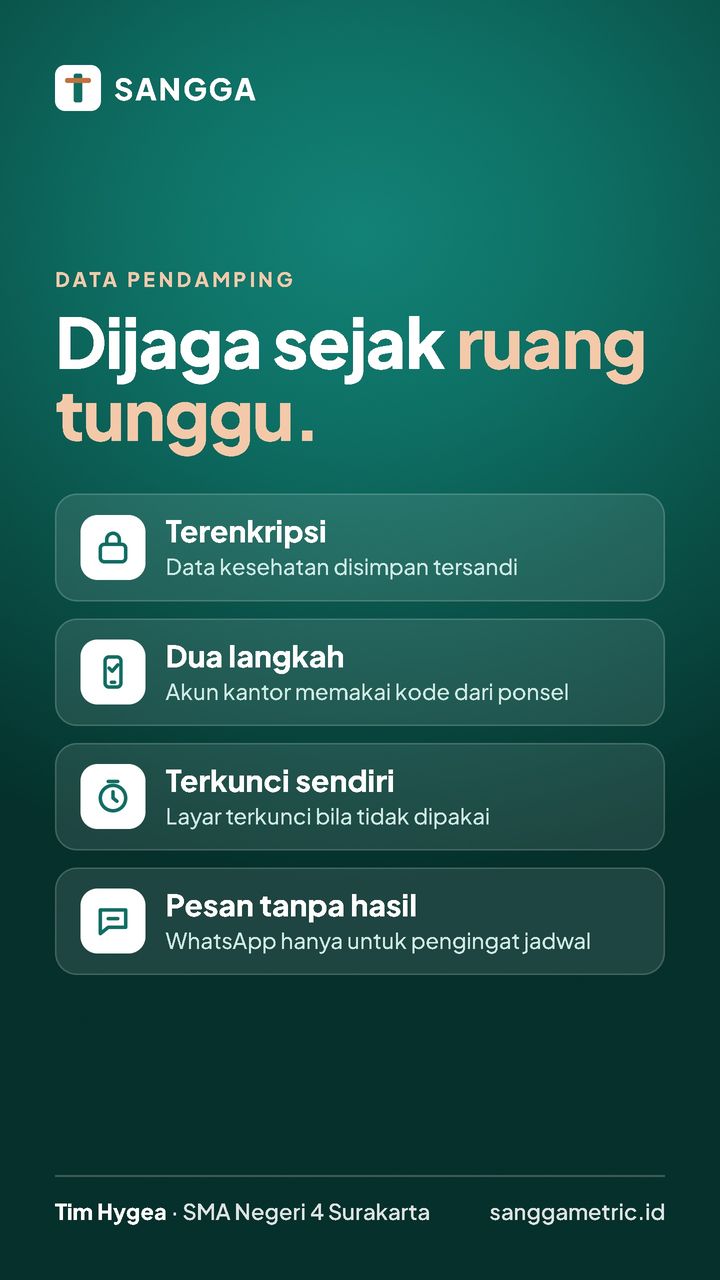
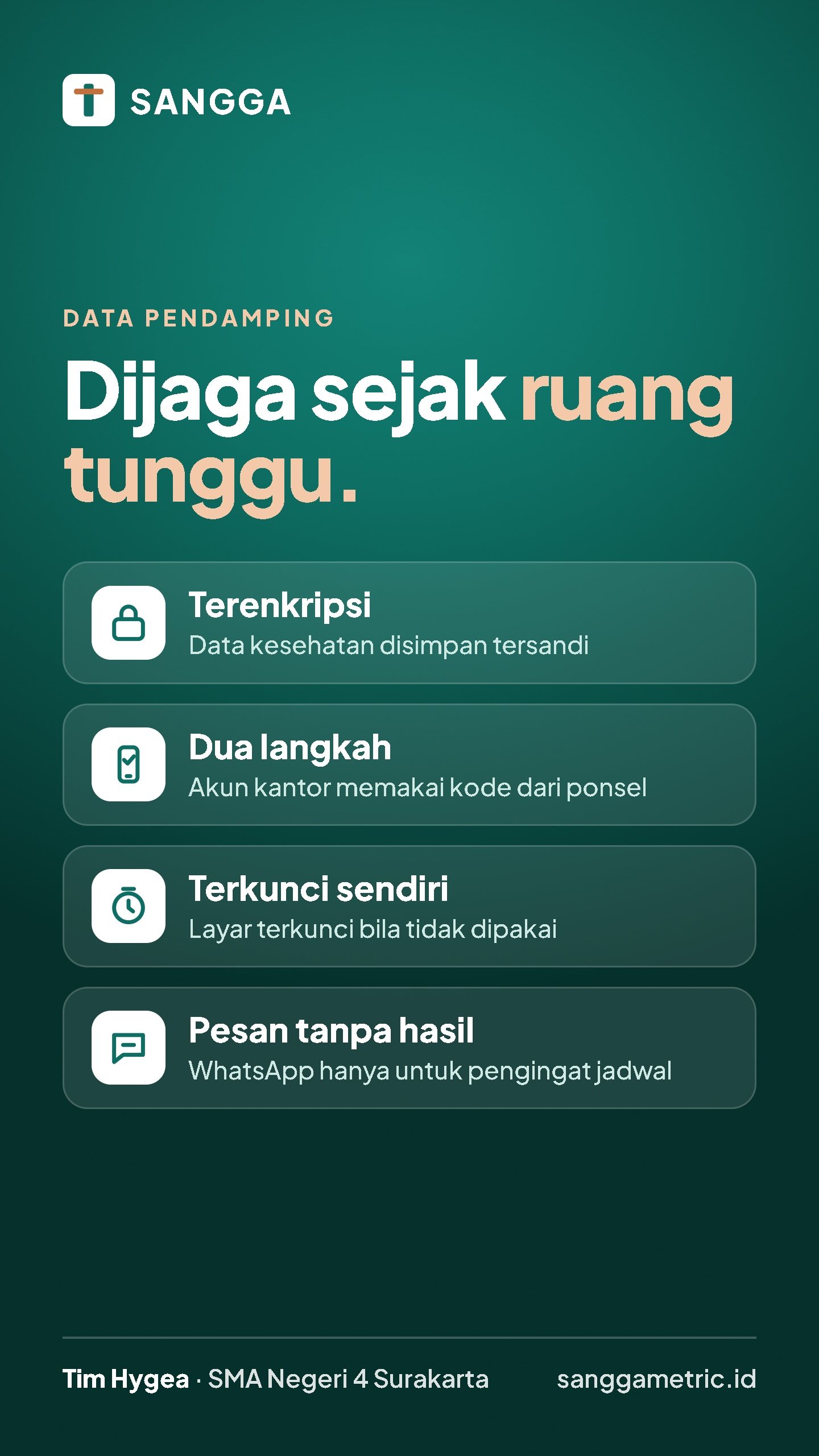
Consent is stored as an append-only history, so a withdrawal can be evidenced. National ID numbers are stored encrypted and cannot be searched in plain form.

Office staff accounts use two-step verification, and the volunteer's screen locks itself after 15 idle minutes.

UU No. 27 Tahun 2022, the Personal Data Protection Act, Article 4(2), Article 9, Article 24, Article 34(2) letters b and d, and Article 40.

Interoperability

The data format already follows SATUSEHAT

Every session maps to FHIR R4: one Encounter and seven Observations carrying LOINC and SNOMED CT codes. Blood pressure is stored as two separate Observations, following the SATUSEHAT pattern.

Submission runs through an adapter that defaults to mock mode. What cannot be submitted yet, and why, is set out under Limits.

SATUSEHAT Platform, the non-communicable disease screening and outpatient medical summary modules.
Limits

What we cannot do yet, and why

The four items below depend on permission or registration held by someone else. We write them down so it is clear that this app is not yet connected to the national system.

  • We do not hold SATUSEHAT production credentials

    Production credentials are issued only to health facilities registered in DFO, REGFASYANKES or RS Online. An app developer cannot hold production credentials of its own. Sandbox credentials can be obtained for trials, and we use them only with sample data.

  • A volunteer cannot be a valid performer in SATUSEHAT

    Practitioner data in SATUSEHAT is read-only and comes from the register of licensed health workers. We record the supervising health worker as the performer and keep the volunteer's identity in the local database only.

  • The caregiver burden instrument is waiting on a licensing decision

    The Zarit Burden Interview is under copyright and exclusively licensed, including its translations and electronic versions. Until written permission is in hand, this version uses copyright-free questions about the caregiving situation instead.

  • WhatsApp reminders cannot run outside the demo yet

    Service-initiated messages must use templates approved by Meta. Without business verification backed by legal documents, sending is capped at 250 recipients per 24 hours. WhatsApp policy also restricts sending health information. We do not use unofficial gateways, because health data would then pass through a third party with no data processing agreement.

Try the demo

Sign in as one of the five roles

Pick a role and press Sign in. Everything here is sample data and may be changed. The carers being screened do not use the app themselves, so they need no account.

Community health volunteer

Tablet or phone at the front desk

Registers carers and runs the three-step screening. The screens are built to be tapped while listening to spoken answers.

Health worker

Phone or a health centre computer

Receives mood results that need follow-up and is the only role that can close them. Also records what happened to referrals.

Health centre administrator

Office computer

Creates and deactivates volunteer accounts, maintains the local support directory, and keeps an eye on referrals and overdue appointments.

District Health Office

Office computer

Sees aggregate, anonymous figures for its own area, including rescreening compliance, and exports them.

System administrator

Office computer

Changes classification thresholds and message templates without touching code, and compiles the field trial report with its confidence intervals.

A five-minute demo route

  1. Community health volunteerScreen one of the carers. Enter a blood pressure of 148/94 and watch the repeat measurement fields appear by themselves.
  2. Community health volunteerAt the mood step, answer the first two questions so that they add up to 3 or more. The Finish button does not appear; only Hand over to a health worker does.
  3. Health workerThat person is already in the queue. This is the only place the pathway can be closed.
  4. Health centre administratorCreate a new volunteer account. The temporary password is shown once only and must be changed at first sign-in.
  5. District Health OfficeRescreening compliance is reported in three parts, and facilities with very few records are suppressed.
  6. System administratorChange the systolic hypertension threshold from 140 to 135, save, and watch the worked example below it move category. Then open the field trial report: its figures are marked as demo data.

The password for every demo account: sangga123.

Team

The team behind SANGGA

SANGGA is made by Team Hygea from SMA Negeri 4 Surakarta, with Universitas Sebelas Maret and two partner clinics in Surakarta.

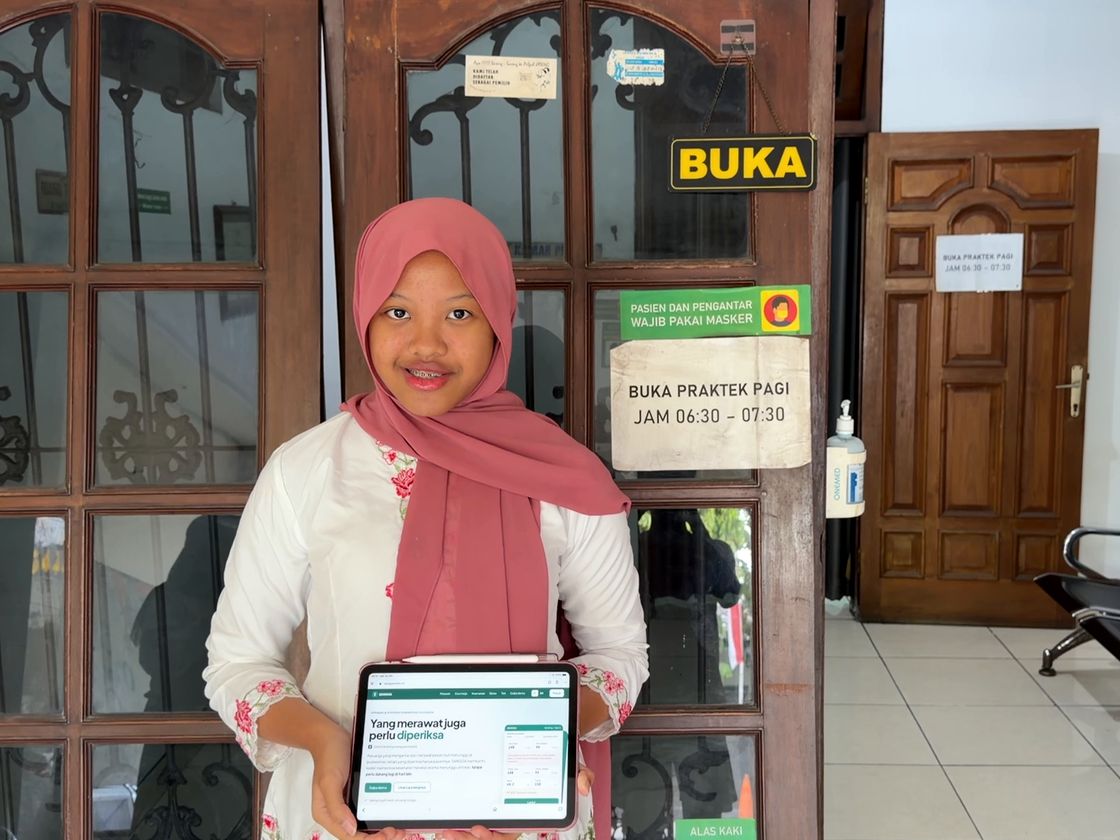
Anindya holds a tablet showing the SANGGA site at the clinic door.
Anindya Ramadiani Putri at a partner clinic in Surakarta.
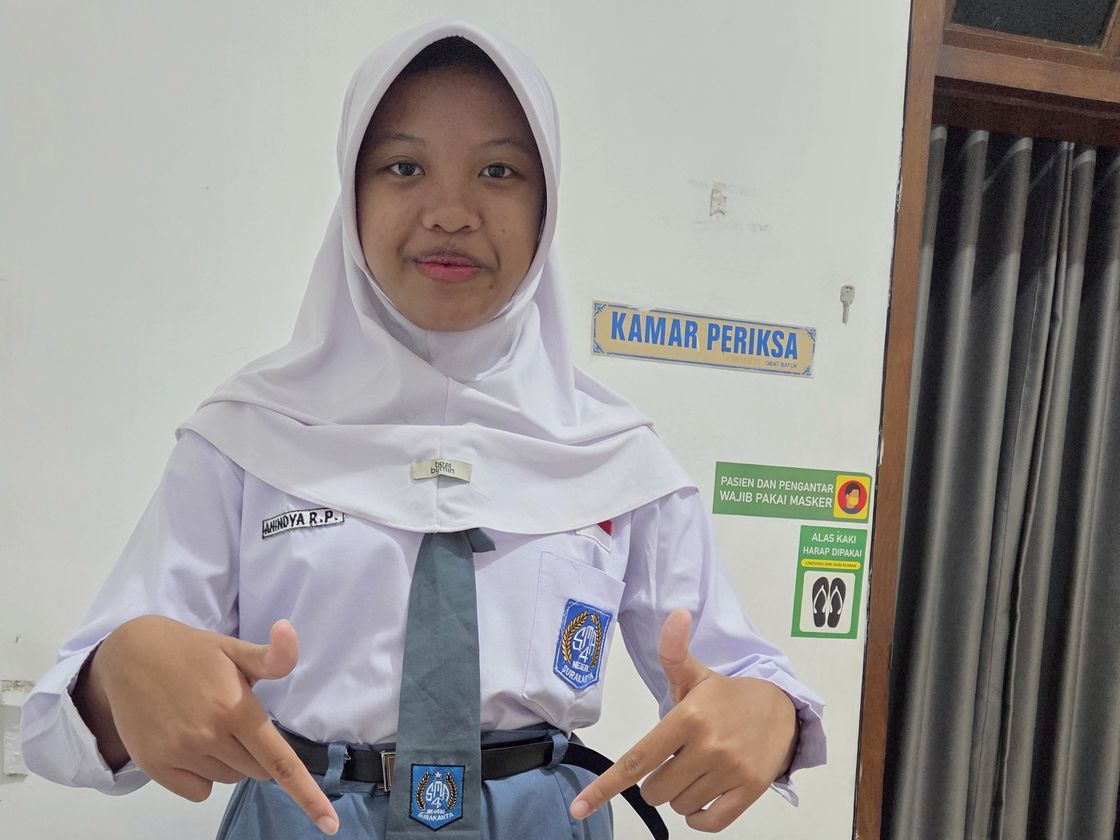
Anindya in her SMA Negeri 4 Surakarta uniform outside an examination room.
Team leader, Team Hygea, SMA Negeri 4 Surakarta.

Anindya Ramadiani Putri

Team leader, Team Hygea · SMA Negeri 4 Surakarta

Principal investigator on the ethical clearance and first-named creator on the copyright record.

Prof. Dr. Ir. Retno Wulan Damayanti, S.T., M.T.

Supervisor · Universitas Sebelas Maret

Supervisor of Team Hygea and co-creator on the copyright record.

Haryono Setiadi, S.T., M.Eng.

Universitas Sebelas Maret

Co-creator on the copyright record.

Partner clinics

Surakarta

Klinik Praktik dr. Endang S. Hardjanti (Manahan) and Klinik Wijaya Kusuma (Mojosongo), the research sites named on the ethical clearance.

Ethics and copyright

Official records

Ethical clearance from the Health Research Ethics Committee, Dr. Moewardi General Hospital, No. 1.664/IX/HREC/2026, 24 September 2026. Copyright registered with DJKI, No. 001552071, held by Universitas Sebelas Maret.

Share

Help more carers get checked too

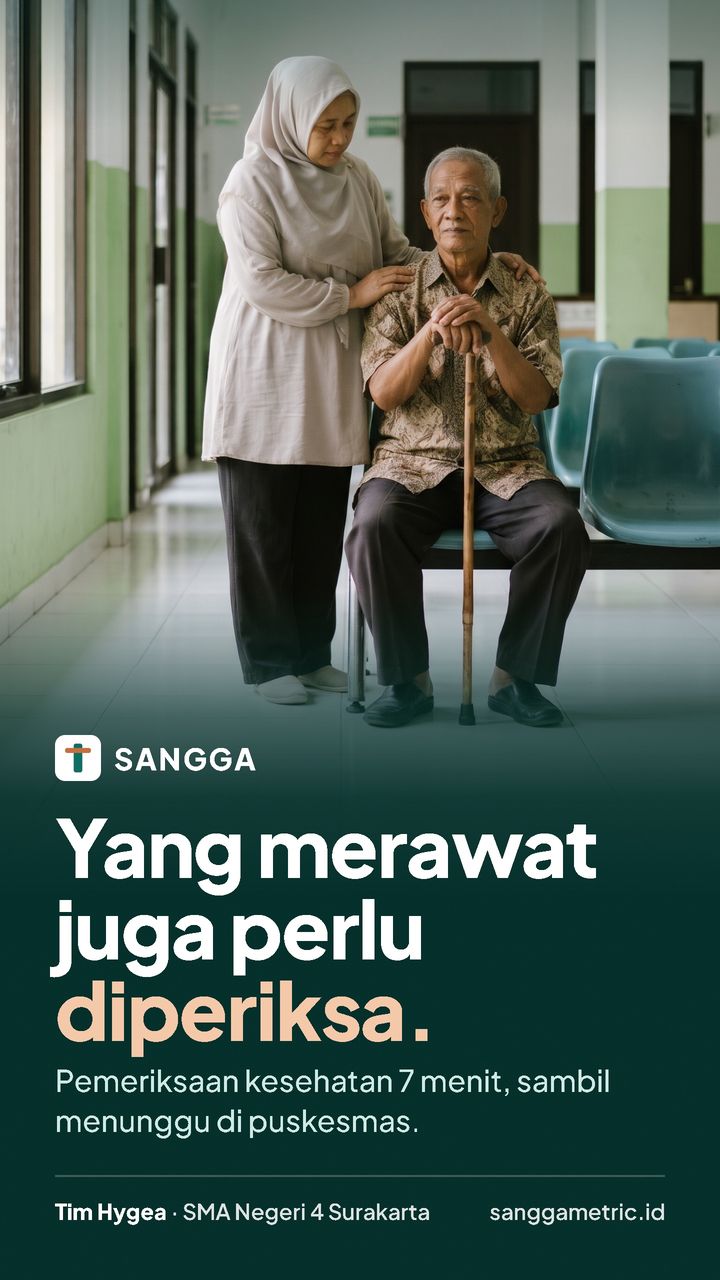
Send these images to volunteers, health centre staff, or relatives who bring patients in for treatment.